WHAT TO PACK FOR A MULTI-DAY HIKE
Summer is just around the corner, and many people are already planning their holidays in El Chaltén. Some will opt for cabin stays and day hikes (see: What to pack for a day hike), while the more adventurous will have one thing on their mind: “I want to spend at least one night camping.”
And that’s when the questions start piling up: “What size pack do I need?”, “What should I bring?”, “Which sleeping bag is right for me?” — and so on.
Let’s break it down. The first step is choosing your itinerary. Doing a traverse like Laguna de los Tres – Laguna Torre (3 days, 2 nights — main trail network of Los Glaciares NP) is a very different undertaking from tackling the Cerro Huemul Circuit (4 days, 3 nights — Remote Zone of Los Glaciares NP or even the W-Circuit in Torres del Paine). Beyond the extra food weight (see: Food for treks and traverses), the latter requires additional gear such as tyrolean traverse equipment, a VHF radio, a GPS device, or a portable phone charger.
To keep things simple, gear can be broken down into three categories:
- Base equipment (tent, sleeping bag, clothing, etc.): Weight and volume remain roughly the same whether you’re out for 2 days or 7.
- Consumables (food, water & gas canisters): The more days you’re out, the more you’ll need.
- Extra / technical gear (crampons, ropes, carabiners, etc.): Varies depending on the specific traverse.
As you can see, the only real variable when it comes to pack weight is your consumables. If you’re out for 3 days, you’ll carry a set amount of food that gradually gets lighter as you eat through it. And that part is entirely personal: some people are happy to carry the extra weight in exchange for a proper gourmet meal paired with a good bottle of wine — while others, like me, live off mate, pasta, and rice (with the occasional freeze-dried meal thrown in). There’s no right or wrong answer, especially when the whole point is to get out there and have a great time in the mountains!!
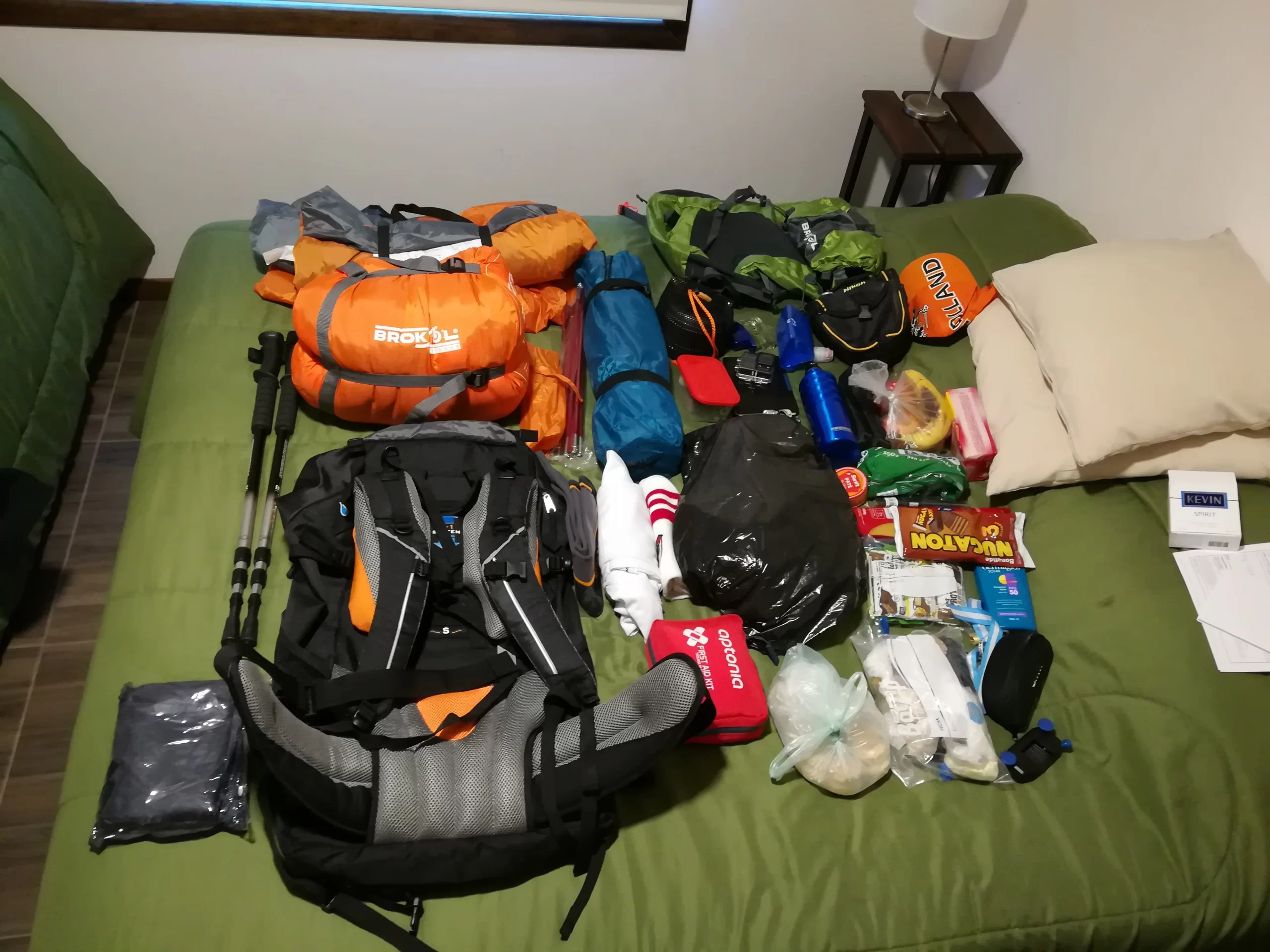
Basic Checklist for Multi-Day Treks
The following checklist covers the essential items for overnight trekking trips during summer in Patagonia. Each person should adapt it to their own needs and the number of days they plan to spend on the trail:
- Backpack: Choose size based on how many days you will be out. Beyond brand and materials, the pack must be comfortable and transfer weight to the hip belt — if your shoulders are aching from the start, something is not adjusted correctly. In terms of volume, a standard trekking pack runs around 50–60 litres for women and 60–70 litres for men. As a general rule, total pack weight should not exceed 25% of your body weigh.
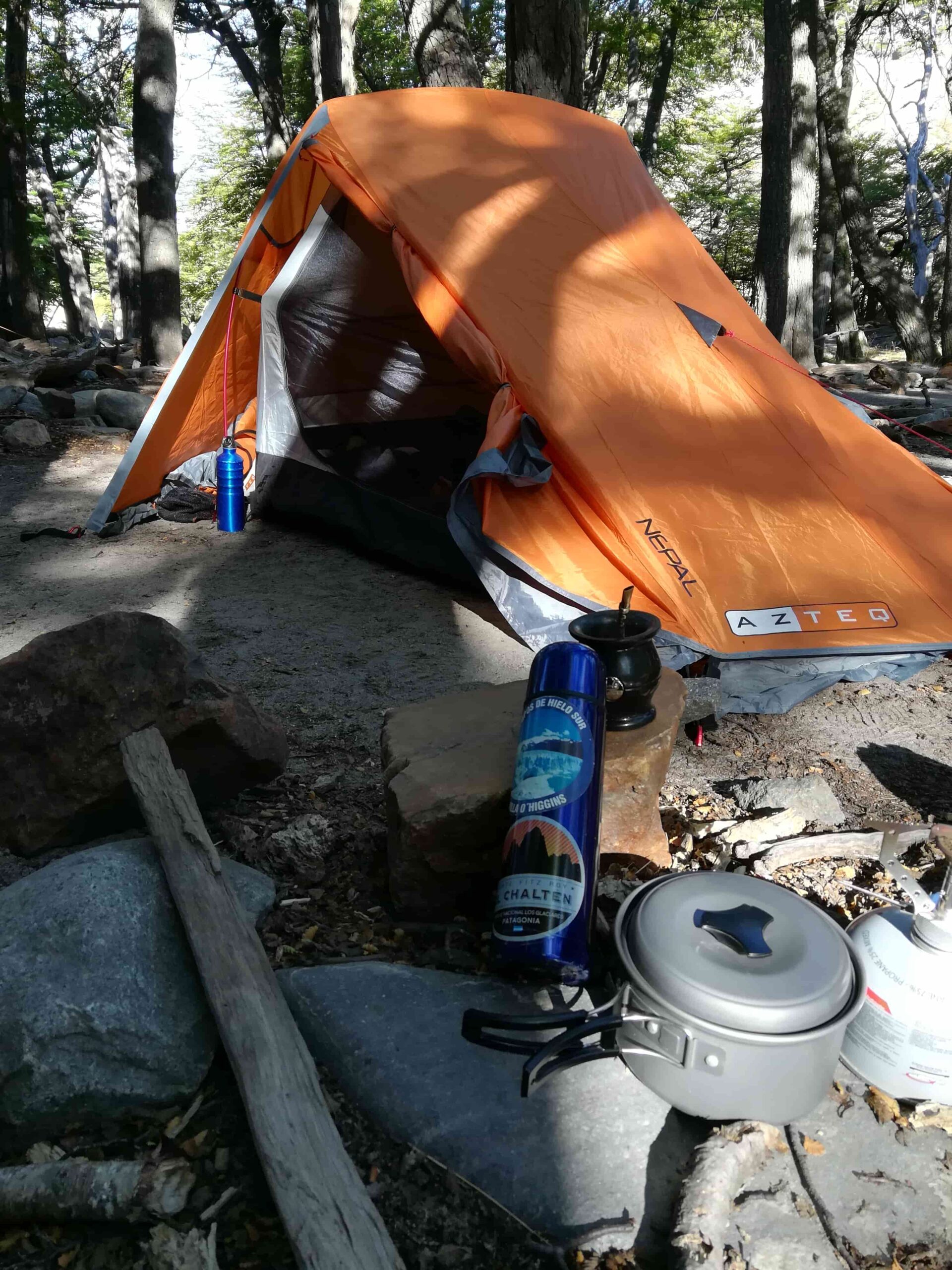
- Tent: Minimum 3-season rating, with good ventilation to reduce condensation and solid waterproofing. For storing packs inside, go one size up (if you are 2 people, get a 3-person tent) — or make sure the tent has a good vestibule.
- Sleeping bag: Can be synthetic (cheaper but heavier) or down (lighter but more expensive). For temperature rating, always go by the comfort temperature: aim for 0°C to -5°C for summer (December–March) and up to -10°C for autumn/winter use. Cold in Torres del Paine can be more intense than expected, especially in wind-exposed sectors — though this also depends on how cold-sensitive you are, and you can always layer up with extra clothing inside the tent.
- Sleeping mat: Either a foam mat or a self-inflating pad, to insulate from the cold ground and add comfort.
- Food: Amount varies by number of days. Plan proper hot meals for camp at the end of each day, and trail snacks (nuts, cereal bars, etc.) for eating on the move.
- Cooking Kit: You will need a lightweight pot or cookset and a gas stove — open fires are strictly prohibited throughout the park.
- Water: All trails have drinking water sources. A 750ml or 1-litre bottle is enough to carry between refill points.
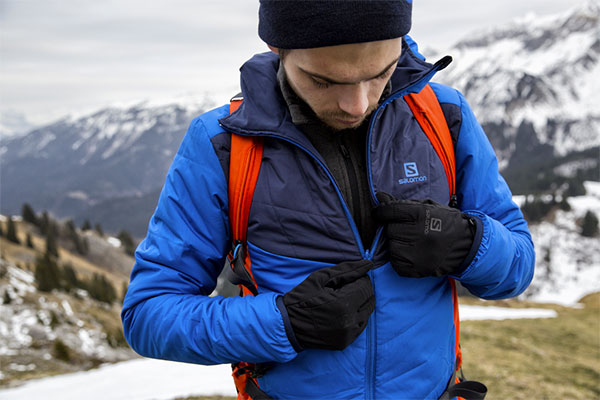
- Clothing: Avoid cotton. Quantity and type depend entirely on the individual — some people wear the same outfit for a week, others change daily. Keep this in mind when calculating weight and space.
Tip: Pack a clean base layer and fresh socks specifically for sleeping (never sleep in your hiking clothes). One extra pair of spare socks is always worth it. - Sun Protection: Sunglasses, sunscreen, hat/cap/buff and any other item to protect against UV exposure.
- Rubbish bags: Everything that comes in must go out — fruit peels, used mate, wrappers, all of it. Leave no trace.
- Personal hygiene kit: Toothbrush, toothpaste, deodorant, comb — the basics. As with everything: no need to pack a full tube of toothpaste for 2 nights. Every gram you can save, your back will thank you for!
Important: Avoid soaps and detergents near water sources — they contaminate streams and rivers. Brush teeth or wash pots at least 50 steps away from any water source. - First aid kit: What you include depends on the person and the route — this topic could easily be a dedicated post on its own. That said, the kit is non-negotiable and should contain at minimum: adhesive bandages, elastic bandage, gauze, disinfectant, pain relief / anti-inflammatory, and any personal medication.
Tip: If you are prone to blisters, pack blister-specific plasters or a dedicated blister ki. - Repair Kit: Essential for longer treks. A multi-tool, duct tape or electrical tape, needle and thread — some tents even come with their own repair kit included.
- Trekking poles: Extremely useful on both ascents and descents, especially on windy or uneven terrain. Poles can be rented or purchased at outdoor gear shops in Puerto Natales before entering the park.
- Phone or camera: Photography enthusiasts may struggle with the decision of whether to bring lenses, a tripod, etc. — factor in the weight and volume. Also consider spare batteries or a portable power bank.
Tip: To prevent batteries from draining overnight in the cold, keep them inside your sleeping bag. - Headlamp (with extra batteries): Essential at camp, and indispensable if you plan to catch a sunrise.
As mentioned above, adapt this checklist to your specific route, the forecast and the time of year. Use these guidelines as a reference, not a rigid rulebook.
If you are planning a single-day hike with no overnight stay, see: Day Hike Packing List.